
- January 1, 2025
- Pandit Madhav Shastri
- 0
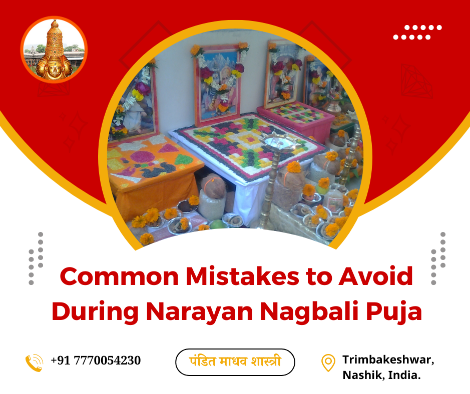
Common Mistakes to Avoid During Narayan Nagbali Puja
Narayan Nagbali Puja is a powerful Vedic ritual performed to appease the souls of ancestors and remove Pitru Dosha and other ancestral issues. Conducted primarily in Trimbakeshwar, Maharashtra, this three-day ritual requires precise adherence to traditional customs and procedures. Even minor mistakes can reduce the effectiveness of the puja, leaving the devotee without the expected spiritual benefits. Hence, understanding and avoiding common errors is essential.
In this blog, we’ll explore the critical mistakes to avoid during Narayan Nagbali Puja, ensuring your spiritual efforts bear fruit.
Understanding the Significance of Narayan Nagbali Puja
Before diving into common mistakes, it’s essential to understand what Narayan Nagbali Puja entails. It is a composite ritual comprising two different ceremonies — Narayan Bali and Nag Bali.
Narayan Bali is performed to liberate the souls of deceased ancestors who suffered unnatural deaths or whose last rites were not properly performed.
Nag Bali is done to absolve the sin of killing a cobra, whether intentionally or accidentally.
This puja helps remove obstacles related to ancestral karma, which may manifest as financial troubles, health issues, delays in marriage, or repeated failures.
Mistake 1: Not Choosing the Right Muhurat
Why is Muhurat So Important?
Vedic rituals derive their potency from astrological alignments. Performing Narayan Nagbali Puja on an inauspicious date can severely impact the results.
What You Should Do:
Consult an experienced astrologer or authorized Pandit.
Prefer performing the puja during Pitru Paksha, Amavasya, or other special tithis related to ancestors.
Avoid eclipses or periods when planetary positions are unfavorable.
Mistake 2: Hiring an Inexperienced or Unauthorized Pandit
What Could Go Wrong?
Improper chanting of mantras, missteps in the ritual sequence, or lack of devotion can make the entire puja ineffective.
What You Should Do:
Verify the credentials of the Pandit.
Check reviews or testimonials if booking online.
Ensure the Pandit is well-versed in the traditional Narayan Nagbali Vidhi.
Mistake 3: Not Following the Dietary and Lifestyle Restrictions
Are Rules Before and After Puja Really Necessary?
Yes. Observing cleanliness, fasting, and abstaining from tamasic food like onion, garlic, and non-veg is crucial to maintaining ritual purity.
What You Should Do:
Begin observing dietary restrictions at least a day before the puja.
Avoid alcohol, tobacco, and any form of indulgence.
Refrain from intimate relations during the puja period.
Mistake 4: Wearing Inappropriate Attire
Does Clothing Affect Spiritual Energy?
Absolutely. Rituals demand a sattvic environment, and wearing modern or flashy clothes breaks the sanctity of the process.
What You Should Do:
Men should wear a dhoti and uttariya, preferably in white or saffron.
Women should wear a saree without any fashionable design or glamour.
Mistake 5: Not Bringing Required Samagri (Items)
Isn’t the Pandit Responsible for Everything?
While Pandits often arrange materials, it is your duty to ensure all essential items are available for the puja.
What You Should Do:
Ask your Pandit for a checklist beforehand.
Include sacred threads, clothes, sesame seeds, rice, a photo of the deceased, etc.
Ensure items are clean and fresh.
Mistake 6: Involving Too Many Uninformed Participants
Can Family Participation Dilute the Ritual?
Yes, especially if the participants don’t follow the same discipline and purity as required by the rituals.
What You Should Do:
Restrict the number of participants to close family who understand the seriousness.
Educate them about the dos and don’ts in advance.
Mistake 7: Ignoring Post-Puja Practices
Isn’t the Puja Itself Enough?
Completing the puja is only part of the journey. What you do afterward also holds significant weight.
What You Should Do:
Distribute food and dakshina to Brahmins.
Donate clothes or money in memory of your ancestors.
Maintain a humble and spiritual attitude for the days following the ritual.
Mistake 8: Performing Puja in Unauthorized Locations
Why is Location So Important?
Narayan Nagbali Puja is traditionally meant to be performed only in Trimbakeshwar due to its strong spiritual energy and sanctified environment.
What You Should Do:
Travel to Trimbakeshwar for the puja.
Avoid shortcuts or performing it at home unless advised by a highly experienced spiritual guide.
Mistake 9: Skipping Astrological Consultation
Can I Just Book the Puja Without a Horoscope Check?
It’s not advisable. Every kundli has its unique configurations that must be studied to decide the right approach.
What You Should Do:
Get your horoscope analyzed for Pitru Dosha or Sarpa Dosha.
Take guidance on whether you should perform Narayan Bali, Nag Bali, or both.
Mistake 10: Treating the Puja Like a Formality
Isn’t Just Attending Enough?
No. Your devotion, mindset, and sincerity play a critical role in determining the outcome.
What You Should Do:
Approach the ritual with faith and humility.
Reflect on your karmas and seek genuine forgiveness.
Frequently Asked Questions
Q1. Can I perform Narayan Nagbali Puja more than once?
Yes, especially if the Pitru Dosha is severe. But do so under astrological guidance.
Q2. Can women perform Narayan Nagbali Puja?
Yes, women can participate. However, in many traditions, a male member acts as the main karta.
Q3. Is it necessary to stay in Trimbakeshwar for all three days?
Yes. The puja takes three full days, and each day’s rituals are interconnected.
Q4. Can I club Narayan Nagbali Puja with other pujas?
Some pujas like Tripindi Shraddha or Kalsarp Dosh Nivaran may be performed along with it, depending on astrological advice.
Conclusion
Narayan Nagbali Puja is not just a ritual but a sacred spiritual journey. Committing even minor errors can block the positive energy and blessings intended through this practice. Hence, careful preparation, strict discipline, and a sincere heart are non-negotiable.
Avoiding these common mistakes ensures that the puja fulfills its purpose — bringing peace to departed souls and prosperity to the living.